This is a video from the Rosy Cross 2 conference at Philosophy Portal as well as an opening to the final Real Talk for the Christianity in Transition series at The Portal.
This is a series of conversations inspired by February 2025 in The Portal including Rob Zahn, Kevin Crouse, Helen Rollins, Timothee Bres, Pamela von Sabljar, and Rebecca Rose Prentice.
This is a conversation with deconstructionologist Jim Palmer and cultural theorist Brendan Graham Dempsey about our upcoming sessions focused on Christianity.
This is a series of conversations inspired by January 2025 at The Portal including Barry Taylor, Terence Blake, Sinziana Ravini, Chris Cutrone and many others.
This is a conversation with Girardian theorist Thomas Hamelryck on the implications of Girard’s thought to the anthropology of religion, and specifically Christianity.
In this video I host Dimitri Crooijmans for a discussion focused on his two contributions to the third Philosophy Portal anthology Logic for the Global Brain.
Doctoral candidate David Burke and I discuss his work at the intersection of psychoanalysis, philosophy, and its application to topics related to the history and culture of metal music.
This Singularities conversation enters dialogue with Samuel Barnes about his upbringing in England, his evolving theories of philosophy and politics, as well as his current political orientation and book project.
This conversation with Arran Rogerson focuses on his metaphor of The Torch as a way to think about reconciliation with the intergenerational nature of our life and becoming.
This discussion with Clément Vidal focuses on his paper “What Is The Noosphere?” with a focus on the work of Pierre Teilhard de Chardin in the context of living systems theory.
Singularities is a new series aiming for a more narrative investigation into the personal dimension of religion. The third episode hosts Javier Rivera, philosopher and writer attempting to think.
In this discussion with psychoanalyst Duane Rousselle and theologian Mark Gerard Murphy we discuss their co-edited volume “Negativity in Psychoanalysis”.
Peter Robinson and I discuss his historical relation to religion growing up in Ireland and England, as well as his movement into scientific rationalism and pluralistic spiritual communities.
This is the second in a series of livestreams dedicated to members of Philosophy Portal's live events to reflect on the theme of the month. This month we reflect on Communism.
Nina Power and I discuss her book What Do Men Want? (2023) which focuses on some of the contemporary issues that specifically center around masculinity and male identity.
Singularities is a new series aiming for a more narrative investigation into the personal dimension of religion. The first episode hosts Jacob Kishere, creator of Sensespace, a project that focuses on unfolding dialogues related to Insight, Wisdom & Healing.
This is the Libido Livestream, the first in a series of livestreams dedicated to members of The Portal’s live events to reflect on the theme of the month.
This is a conversation with Owen Cox, Filip Lundström, David Högberg, and Dimitri Crooijmans focused on an upcoming physical live event hosted by Dark Renaissance Productions in Gothenburg Sweden.
This video represents a personal year in review from Philosophy Portal, what was achieved in 2023, and some directions that may be helpful moving into 2024.
This is a discussion with meta-shaman Layman Pascal and occultist Owen Cox inspired by Pascal’s course on magic and new blog introducing the concept of Xagick.
This is an interview with writer Matthew Stanley of Samsara Diagnostics inspired by his publication “It Was Nothing” which focuses on a dialectical analysis of Heidegger and Nishitani.
This is an interview with theologian Matthew Segal, who works as an associate professor at the California Institute of Integral Studies, and focused on his book “Crossing the Threshold”.
This is an interview with Marxist philosopher Chris Cutrone, who teaches critical theory at the School of the Art Institute in Chicago, to discuss his book The Death of the Millennial Left.
This is a conversation with Daniel L. Garner of O.G. Rose and Andrew Sweeny of Parallax, to discuss the course at Parallax led by O.G. Rose “Look at the Birds of the Air”.
This is a conversation with Michael Downs and David McKerracher of Theory Underground to discuss a course led by Michael Downs focused on Nick Land’s philosophy.
This is an interview with Dr. Andrew Davis to discuss his recently published book The Metaphysics of Exo-Life which explores contemporary cosmology of extraterrestrial life through the work of Whitehead’s process philosophy.
This is an interview with author Pae Veo to discuss his book The Pèrelin Decline, a fictional work exploring dimensions of history, existence and freedom.
This is an interview with philosopher Dr. Adrian Johnston to discuss his book A New German Idealism, a work which aims to think through German Idealism after Slavoj Zizek’s Less Than Nothing and Absolute Recoil.
This is an interview with political activists Malcolm and Simone Collins to discuss their book A Pragmatists Guide to Crafting Religion, a work which attempts to think through the concept of the cultivar to approach the problem of declining reproduction among affluent cultures.
This is an interview with negative practitioner Dr. Julie Reshe to discuss her book Negative Psychoanalysis for the Living Dead, a work which explores the limits of therapy culture and introduces a psychoanalysis beyond the clinic in negative practice.
This is an interview with academic Dr. Samuel McCormick to discuss approaches to reading Lacan’s Écrits, in preparation for Philosophy Portal’s course on the Écrits.
This is an interview with Dr. Daniel Tutt, to discuss his book The Psychoanalysis of the Family, which puts psychoanalysis in closer contact with political questions of family and community.
In this seminar with Peter Rollins we are introduced to the notion of pyrotheology and the conditions of possibility for a Church of the Contradiction.
This video represents a book discussion focused on my second official solo book, Systems and Subjects, and featuring four guests/interlocutors, including Layman Pascal, Thomas Hamelryck, Daniel L. Garner, and Tim Adalin.
In this interview with psychologist Dr. Davood Gozli we explore his book Experimental Psychology and Human Agency with a focus to what he has learned since its publication.
In this conversation with professor Dr. Bruce Alderman we explore his life as a teacher and thinker in-between a transition that can be reflected for deeper perceptive on our current moment.
In this conversation with life and couples coach Kevin Orosz, one of the co-authors of Sex, Masculinity, God, to discuss his relationship and intimacy work, Primal Polarity.
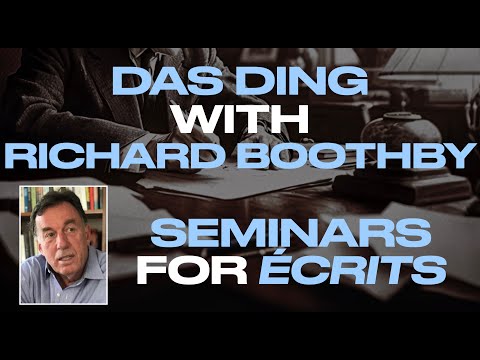
In this conversation Dr. Richard Boothby discusses his latest book, Embracing the Void, which forwards the theory that the unknown is central to a psychoanalytic theory of religion.
This video covers the overall aim of Systems and Subjects, which puts systems science into conversations with continental philosophy, with the four main chapters of the book, each inspired by opening discourse between Bertalanffy's systems science and a particular figure of continental philosophy (Heidegger, Freud, Nietzsche, and Hegel).
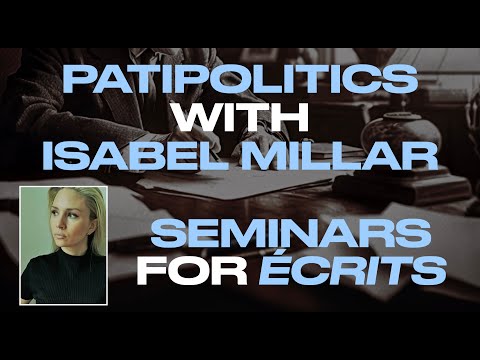
In this discussion, Dr. Isabel Millar introduces us to the reasons why she put neuroscience and psychoanalysis into closer conversation, opening up a 'provocation': "the psychoanalysis of artificial intelligence".
In this discussion with Michael Downs and David McKerracher of Theory Underground, we first explore the roots of their collaboration, background and interest in philosophy, and introduction to Zizek's work.
In this discussion, David, Ann and I discuss the importance of thinking The Idea of the University in the contemporary neoliberal and digitised political-economic landscape.
In this discussion, I reflect with four students on their experience working with Philosophy Portal in 2022, first working through the Phenomenology of Spirit, and moving towards the Science of Logic.
This conversation aims to put contemporary theories of the brain, and the resulting technological projects related to artificial intelligence and machine learning, into deeper discourse with Hegelian dialectics and logic.
The "metaphysics" of adjacency is the paradoxical recognition that we find ourselves in a post-metaphysical era due to a widespread shift in the sense of truth.
In this discussion, I explore Dimitri Crooijmans chapter in Enter the Alien, focused on his attempt to put Tantric practices and Hegelian philosophy into a deeper interrelation.
In this discussion, I explore Quinn Whelehan's chapter in Enter the Alien, focused on the relation between Nagarjuna's Buddhistic logic and Hegel's dialectical logic.
An Iconoclast is technically someone who attacks or criticises cherished beliefs or institutions. In this conversation, I discuss with Samuel Barnes about his new book, The Iconoclast: An Anti-Philosophy.
In this discussion, I will explore with the founders of the Parallax Sangha, Andrew Sweeny and Owen Cox, the history of their movement, some of their core motivations and inspirations, as well as what they anticipate it could become in the year(s) to come.
In this conversation we will explore Marc Blainey's doctoral research in full, which was recently released in a SUNY series of Transpersonal and Humanistic Psychology, and titled "Christ Returns from the Jungle: Ayahuasca Religion as Mystical Healing".
The Nietzsche Dialogues is over, but I thought it would be fun to bring on a couple of guests from the dialogues to do an open session. Ask us anything about Nietzsche and Thus Spoke Zarathustra!
In this final discussion in "The Nietzsche Dialogues", we explore Bard's interpretations of Nietzsche as a philosopher, his potential futures, as well as his own understanding of core Nietzschean concepts: Perspectivism, Overman, Will to Power, Master/Slave Morality, and the Eternal Return.
In this discussion, we attempt to reflection on some crucial passages in Nietzsche as it relates to the body, sexual difference, and women. These reflections include Nietzsche's ideas about "body haters", "pleasures and pains of passion", "chastity", "relations between men and women", as well as "marriage and reproduction".
In this discussion we seek to explore topic of nihilism and its overcoming with Nietzsche’s concepts of the will to power and eternal recurrence. Here we situate both concepts in relation to the postmodern problem of “the understanding’s” desire for “fixed values”, and its relation to the thing-in-itself, which appears to be fundamentally transient, and thus unfixable.
In this discussion Layman Pascal and I seek to explore the way he makes sense of Nietzsche, and how he views his potential importance to the development of the "liminal web", among other adjacent movements and projects, like Ontario Depth Adaptation.
Here I attempt to dialogue with Paul Robson, founder of Maniphesto, part of a larger European Men's Network, a former secular atheist in the Dawkins tradition, and now a self-identified Christian whose belief in God has helped him to build a new movement towards empowered masculinity in the 21st century.
Daniel Fraga and I discuss Ontological Design as the central idea that design should not be thought as object-oriented, but rather as a recursive feedback loop with subjectivity itself.
Johannes A. Niederhauser, founder of Halkyon Thinkers Guild, and Alexander Bard, philosopher of technology, join me to discuss their own thoughts on and personal relationship with edtech.
A conversation at year-end about what is happening in online intellectual spaces: what is sensed?, what is missing?, what is hoped for? We will various discuss topics of violence/conflict, sexuality/intimacy, money/power, recognition/attention, lack/insecurity, and truth/fantasy (featuring Owen Cox, Daniel Fraga (of Technosocial), Kevin Orosz, Daniel Dick (Sex, Masculinity, God), O.G. Rose, Tim Adalin, Alexander Ebert (Philosophy of Lack).
Johannes A. Niederhauser argues that death is a central notion in Martin Heidegger’s work on the questions being and time, and even takes us to the core of Heidegger's entire thinking path.
In this Philosophical Freestyle, Cadell Last and O.G. Rose attempt to tackle one of the most monstrous concepts in Hegel's Philosophy: Absolute Knowing.
In our second discourse on the Philosophy of Lack, I propose to shift our context to Democritus, and his atomist ontology, which we may say is the spontaneous unofficial metaphysics of scientific materialism (i.e. the universe at base is divided between indivisible somethings and nothing (“the void”).
In this conversation series, we seek to enquire deeper about the experience and the philosophy of Lack, and ultimately, what such a philosophy might say about our contemporary culture.
In this conversation I host Alexander Bard and Alexander Elung to discuss the philosophy of "transcendental emergentism" and its relation to the future of philosophy, science and community.
In this dialogue with Susan Guner we introduce the basic concept of meditation as a simple act of sitting in silence with oneself and bringing conscious attention or observation reflectively to self.
In this discussion about "Frameworks for Thinking" I discuss with psychologist Maciej Swiezy about the way frameworks structure our understanding of reality, how frameworks can be played with to improve our thinking processes and societies, and the nature of frameworks in themselves as structured by metaphors and limitations of our cognition.