Recorded Course · Philosophy Portal
Hegel's Science of Logic Course
Rethinking Logic for the Modern World
6 guest thinkers
21 sessions
80+ hours
Lifetime access
Why read the Science of Logic?
Hegel’s Science of Logic is often regarded as a pinnacle of abstraction. Yet it offers a remarkably powerful way of understanding how our concepts shape reality and open up new ways of thinking about knowledge, freedom, and life.
For centuries, logic was largely understood through categories inherited from Aristotle: identity, non-contradiction, definition, classification, and valid inference.
Hegel’s Science of Logic marks a radical shift, rethinking what logic itself could become in the modern world. Rather than treating logical categories as fixed forms, Hegel asks how concepts develop, contradict themselves, and transform from within.
This Science of Logic course is designed to open a window into how Hegel’s philosophical reinvention can mature your intellectual growth and self-reflexion:
-
Studying Hegel here is also an invitation to think with Hegelian rigor — to test your own concepts with the same precision, discipline, and attention to internal consistency.
The Science of Logic examines the categories of thought themselves — Being, Essence, and Concept. Its aim is to understand how pure thought determines and negates itself, becoming progressively conscious of its own movement, from the most abstract immediacy to the Absolute Idea.
This discipline develops a practice of immanent critique: never treating a definition as fixed, always testing its internal coherence, and tracing how apparent opposites — finite/infinite, identity/difference, quantity/quality — are in fact mutually implicated.
It is a training in thought that extends far beyond Hegel. Those who work rigorously with concepts — in philosophy, research, writing, or elsewhere — will find in it a rare intellectual discipline.
-
The book begins with a provocative idea: pure Being — what is there at the outset, without any determination — is so indeterminate that it is indistinguishable from Nothing. Only Becoming — the movement between the two — emerges as a genuinely thinkable category.
Applied to the question of the self, this means thinking of identity as an ongoing process of determination rather than as something already given. This structure offers a conceptual resource more than a form of consolation, but it speaks directly to a very contemporary concern: what it means to construct oneself over time.
The Science of Logic is almost impossible to read alone. A guided reading — with clear reference points, examples, and a steady pace — makes a real difference. Our promise is simple: this is a demanding text, and this course is a guide through it, not a shortcut.
A demanding text that needs a guide
Key concepts you'll explore
-
Being, Nothing & Becoming
Follow the famous opening movement of the Logic and explore why Being and Nothing cannot remain completely separate — giving rise to Becoming.
-
Philosophy Between Language & Life
Hegelian philosophy challenges the separation between abstract thought and lived reality. Concepts are not merely words through which philosophers describe an already completed world: they shape how reality becomes intelligible to us. The course explores the philosopher’s position within this movement.
-
Objectivity of discourse
How can thought move beyond individual opinion toward something objectively true? Examine the relationship between concepts and objects and Hegel's attempt to move beyond a simple opposition between subjective thought and an external world.
-
The Logic of Life and Death itself
For Hegel, life is not external to logic: it emerges at a decisive point in the development of the Idea. Through Hegel’s account of Life, the course explores how the dynamics of life and death reveal something fundamental about individuality, contradiction, and self-development.
-
Logical unfolding of stories
Why do ideas — and stories — develop through conflict, transformation, and resolution? The course explores how this dialectical movement can illuminate the structure of narratives, where identities, conflicts, and meanings emerge through the unfolding of the story rather than being completely determined in advance.
-
Finitude & Infinity
Examine how finite things relate to their limits and why Hegel rejects the idea of infinity as simply something endlessly beyond the finite.
-
Essence & Appearance
Explore the movement from what immediately appears to the structures and relations through which appearance becomes intelligible.
-
Identity & Difference
Question the apparently simple principle that something is identical with itself and examine why identity, for Hegel, already contains difference.
-
The Concept
Follow Hegel's transition from Being and Essence toward the Concept, where thought becomes increasingly capable of grasping its own activity.
How to read Hegel’s Science of Logic?
Detailed program
-
Session 1 — Two Prefaces, Two Moments in Hegel’s Logic
The course opens by reading the two Prefaces Hegel wrote for the Science of Logic, in 1812 and 1832. Written twenty years apart, they offer two snapshots of Hegel’s philosophical development: the first at the beginning of the project, the second near the end of his life.
Reading them together allows us to see how Hegel’s understanding of logic itself matured — moving away from a metaphysics centred on fixed identity toward a logic in which contradiction becomes productive.
Session 2 — What Is New About Hegel’s Logic?
Before entering the individual categories of the Science of Logic, this session steps back to examine Hegel’s Introduction and the larger philosophical project behind the book.
What distinguishes Hegelian logic from traditional logic? What does it mean for logical determinations to be objective? And why does Hegel believe that logic must move beyond fixed rules of thought toward the self-development of concepts themselves?
The session also introduces an important tension that will accompany the entire course. Hegel is often associated with negativity and contradiction, yet negativity is never the final destination. The movement through the negative is what makes possible the positive determination of the Absolute Idea.
-
Session 3 — Determinateness: How Something Becomes What It Is
The first sustained encounter with Hegel’s Doctrine of Being begins with determinateness and quality.
Session 4 — Magnitude: Quantity, Desire and the Contemporary World
The course turns from quality to quantity.
Alongside a close reading of Hegel’s account of magnitude, the session brings these categories into conversation with contemporary life.
Session 5 — Measure: Where Quantity Becomes Quality
Measure brings together the two major movements encountered so far: quality and quantity.
This movement also prepares one of the major transitions of the Science of Logic: from Being to Essence. The session asks why immediate being can no longer adequately account for reality — and why thought must begin to investigate the relations and mediations that lie beneath what immediately appears.
Session 6 — True Infinity: Reflecting on the Doctrine of Being
Led by Dimitry Crooijmans, this open session returns to the Doctrine of Being as a whole.
Particular attention is given to Hegel’s concept of true infinity.
The remainder of the session opens the discussion to participants, creating space to revisit the central problems of Being, Nothing, Becoming, determinateness, quantity, measure and infinity before moving into the Doctrine of Essence.
-
Session 7 — Reflection Within: From Being to Essence
The course now enters the Doctrine of Essence.
Working through Shine, The Essentialities and Ground, the session explores how identity, difference, contradiction and ground emerge from this reflective movement — and why Essence requires us to rethink the apparent opposition between what appears and what lies beneath appearance.
Session 8 — Appearance: When Essence Enters Existence
This session examines Concrete Existence, Appearance and the Essential Relation, following Hegel’s attempt to mediate the relationship between underlying structures and the concrete forms through which they appear.
Session 9 — Actuality: Possibility, Necessity and the Absolute
The final formal session on the Doctrine of Essence turns to Actuality.
The philosophical stakes are considerable: what does it mean for something to be merely possible, actually existing, or necessary? And how can we understand necessity without reducing reality to a closed and predetermined system?
These questions bring the Doctrine of Essence to its limit and prepare the decisive transition toward the Doctrine of the Concept.
Session 10 — Reflecting on the Doctrine of Essence
Open session with Dimitry Crooijmans
This open session creates space to return to the Doctrine of Essence as a whole.
Participants revisit reflection, identity, difference, contradiction, ground, appearance and actuality, bringing their own questions and interpretations into the discussion.
The aim is not simply to review what has already been covered, but to test how the different moments of Essence relate to one another — and to clarify the movement that will eventually make the transition to the Concept possible.
-
Session 11 — Subjectivity: The Becoming of the Concept
The course now enters Hegel’s Subjective Logic and the Doctrine of the Concept.
Working through The Concept, Judgment and the Syllogism, the session examines a decisive shift in perspective. Thought is no longer primarily investigating objects from the outside; the logical movement increasingly turns toward the activity of conceptual determination itself.
This transition opens questions of interiority and subjective becoming. What does it mean for thought to internalize the movement it has previously encountered in Being and Essence? And how might Hegel’s logic illuminate the difficult process through which a subject becomes capable of thinking its own determinations?
Session 12 — Objectivity: Mechanism, Chemism and Teleology
After Subjectivity, Hegel turns again toward the object — but the object now appears differently.
The session follows the movement through Mechanism, Chemism and Teleology, three increasingly complex ways of understanding how objects relate to one another.
Session 13 — The Idea: Life and Cognition
The session examines Hegel’s account of Life and the Idea of Cognition, exploring how individuality, self-relation and relation to an external world become essential to the development of the Idea.
This also returns us to Hegel’s broader conception of the philosophical sciences and raises a provocative question: what kind of relationship between logic, life and knowledge is Hegel ultimately attempting to construct?
Session 14 — The Absolute Idea: Why the End Is Also a Beginning
The final formal presentation reaches the Absolute Idea, the culmination of the Science of Logic.
Yet Hegel’s conclusion is not simply a final proposition or a point at which thought comes to rest. The end contains the possibility of another beginning — one that would have been impossible without the entire movement that preceded it.
The session therefore asks how the journey from Being through Essence to Concept transforms the meaning of the beginning itself. The Logic closes not by leaving movement behind, but by showing why genuine beginnings emerge only through mediation.
Session 15 — Reflecting on the Doctrine of the Concept
The final open session returns to the Doctrine of the Concept as a whole.
Participants reflect on subjectivity, objectivity, Life, Cognition and the Absolute Idea, bringing together questions developed throughout the final stage of the course.
-
The Dialectics of AI: From Friston to Hegel - Guest lecture with Thomas Hamelryck
How might Hegel’s logic speak to contemporary developments in computation, neuroscience and artificial intelligence?
Thomas Hamelryck introduces concepts from modern statistics, machine learning and the work of Karl Friston, opening possible connections between contemporary theories of cognition and Hegel’s Science of Logic.
Rather than simply claiming that Hegel anticipated artificial intelligence, the session asks a more interesting question: can dialectical logic help us think differently about inference, prediction, cognition and the relation between mind and world?
Category Theory and Hegel - Guest lecture with William Rupush
This session brings Hegelian logic into conversation with contemporary mathematics.
William Rupush introduces category theory, a mathematical framework concerned less with isolated objects than with the relations and transformations between them.
The discussion explores whether developments in modern mathematics might offer new resources for thinking dialectically — and whether Hegel’s emphasis on relation, mediation and transformation can enter into productive dialogue with mathematical forms that emerged long after his death.
Sublation, Negativity and the Unconscious - Guest lecture with Alex Ebert
Alex Ebert leads a series of provocations around one of the most familiar — and frequently simplified — concepts associated with Hegel: sublation.
The discussion moves through interiority and exteriority, limit and drive, excess and absence, and the recurring philosophical search for negativity.
From there, the session opens toward questions of the unconscious and cognition: how might limits themselves generate forms of knowing? And what happens if contradiction is understood not merely as something thought encounters, but as something involved in the production of thought itself?
From Hume to Hegel: The Problem of Common Life - Guest lecture with Daniel Garner
Daniel Garner brings Hegel into conversation with David Hume and the philosophical inheritance of the Scottish Enlightenment.
Rather than treating Hume and Hegel as belonging to fundamentally opposed traditions, the session explores possible affinities between their work and asks how both might help us reconsider the problem of common life.
The discussion addresses concrete experience, autonomous rationality and what Garner describes as the risks of a “barbarism of refinement” — opening a broader question about whether modern philosophy can rediscover forms of rationality rooted in shared life rather than abstraction alone.
Hegel, Heidegger and Continental Thought - Guest lecture with Thomas Winn
Thomas Winn brings the Science of Logic into conversation with Heidegger and the wider tradition of continental philosophy.
The session explores what happens to Hegelian questions of Being, mediation and the Absolute when they are encountered from within a philosophical tradition that frequently defines itself through a critical relation to Hegel.
Rather than reducing the encounter to a simple opposition between two philosophers, the discussion opens a wider reflection on the different ways twentieth-century continental thought inherits, transforms and contests the problems established by German Idealism.
From Mediation to Meditation and Back Again - Guest lecture with Layman Pascal
The course concludes its series of contemporary dialogues with Layman Pascal and his work on the Metaphysics of Adjacency.
Bringing Hegel into conversation with Integral Theory and metamodern spirituality, the session explores the relationship between mediation and meditation, philosophical concepts and spiritual practices, and the ways contemporary metaphysics might intersect with dialectical thought.
Rather than treating Hegel as a closed historical system, the session asks what happens when the Science of Logic becomes a resource for philosophical experiments that Hegel himself could never have anticipated.
From Being to Essence, from Essence to Concept, the course follows the movement of Hegel’s logic as it develops through contradiction, mediation, and transformation.
21 sessions combining close reading, open discussions, and guest lectures.
Course extract
Watch an extract from the Science of Logic course and see how Philosophy Portal approaches close reading, dialectical thinking and collective philosophical inquiry.
About the Professor
Why study Hegel with Cadell Last?
Dr. Cadell Last is the creator and founder of Philosophy Portal, an educational platform dedicated to teaching the foundational philosophical discourses of the modern world.
His engagement with Hegel is part of a much broader intellectual project. Trained across evolutionary anthropology, systems science and philosophy, Cadell approaches philosophical texts from an interdisciplinary and dialectical perspective. His work repeatedly returns to questions that are also at the heart of the Science of Logic: how concepts develop, how contradiction generates new determinations, how thought relates to objectivity, and how logic opens onto questions of knowledge, freedom, life, and the structure of reality itself.
A continuing engagement with Hegel
The Science of Logic is part of a broader exploration of Hegel’s philosophy at Philosophy Portal. Continue your journey with Cadell Last through two other major works: the Phenomenology of Spirit, which follows the development of consciousness through experience, contradiction, and recognition, and the Philosophy of Right, where Hegel turns to freedom, social life, politics and the modern state.
Hegel's Logic in Conversation
Throughout the course, six invited thinkers bring Hegel into dialogue with contemporary fields including artificial intelligence, mathematics, metaphysics, life, music, religion, and continental philosophy.
-
![]()
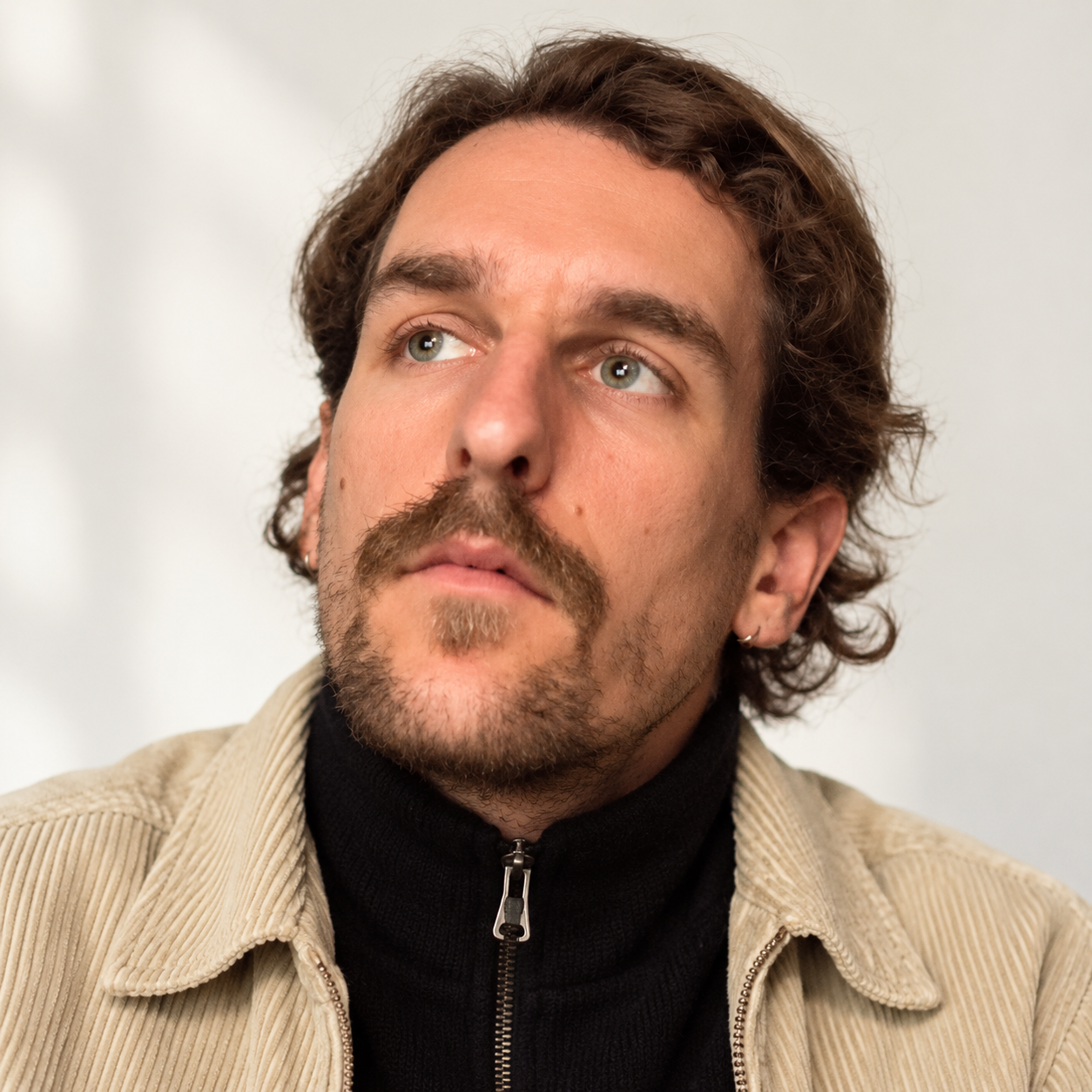
Alex Ebert
Alex will teach you music and creativity.
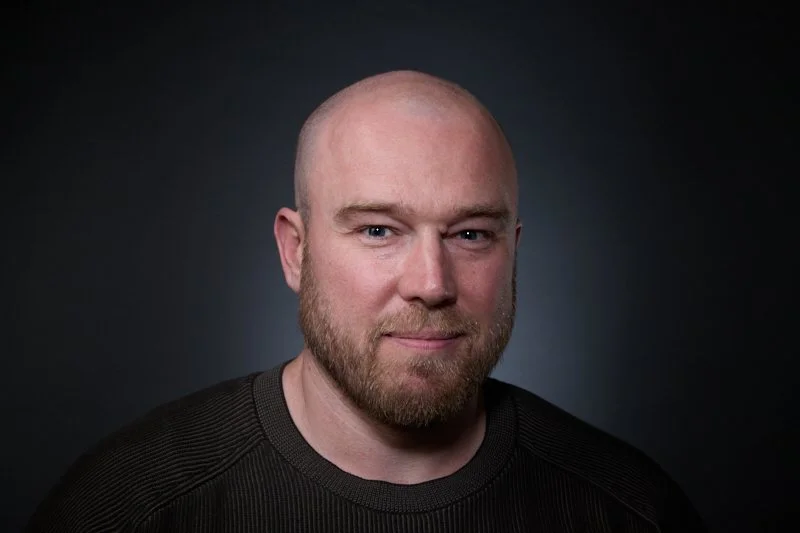
Alex Ebert is an incidental musician and philosopher. His interest in Hegelian philosophy began with his development of a peculiar mathematical function (magnetic zeros). Said function is now the centerpiece of his Hegelian philosophy of sublation (freQ theory).
-
![]()
Thomas Hamelryck
Thomas Hamelryck will teach you computation and artificial intelligence.
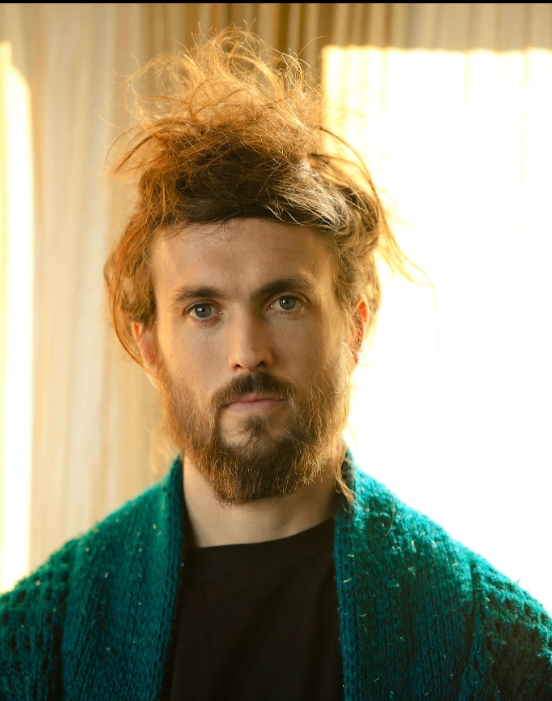
Thomas Hamelryck is a researcher in bioinformatics, Bayesian statistics and probabilistic machine learning. He uses the work of the French anthropologist Rene Girard to understand the interplay between archaic human nature and the modern digital network.
-
![]()
William Rupush
William will teach you mathematics and category theory.
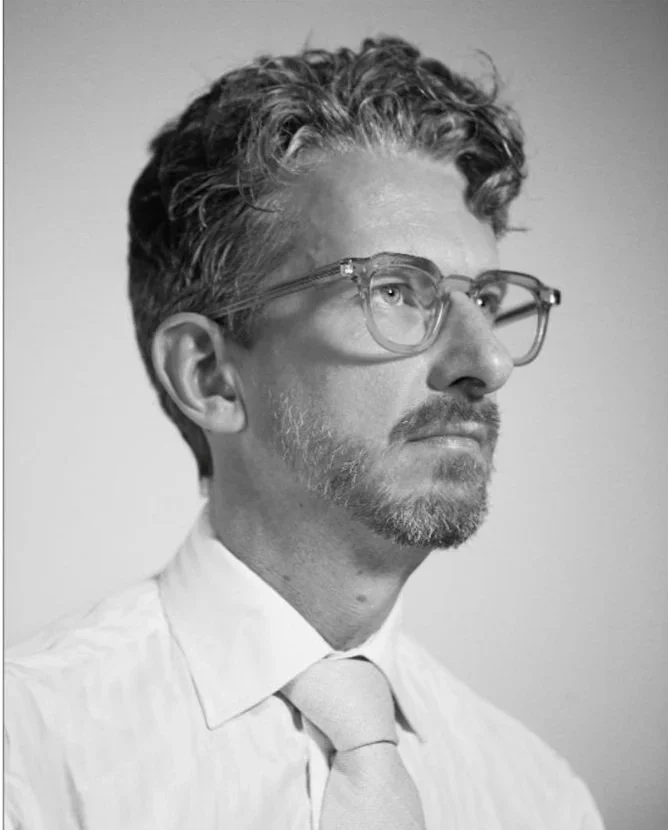
Educational background in mathematics, phyics and astronomy. Currently in a PHD program with project on quantum control for material science.
-
![]()
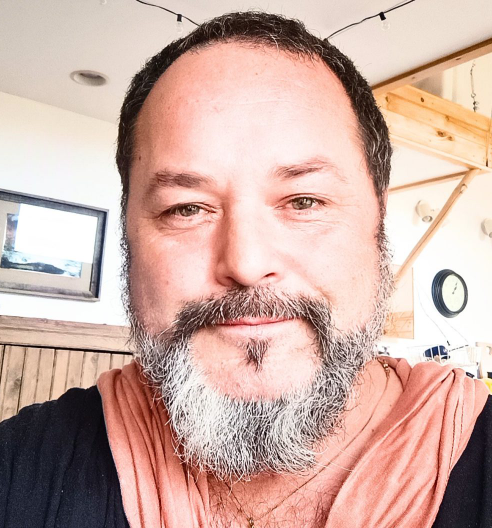
Daniel Garner - O.G Rose
Daniel will teach you Hume’s return to common life.
O.G. Rose spent several years working collaboratively with other artists at Eunoia, a creative community. O.G. Rose spent several years working collaboratively with other artists at Eunoia, a creative community
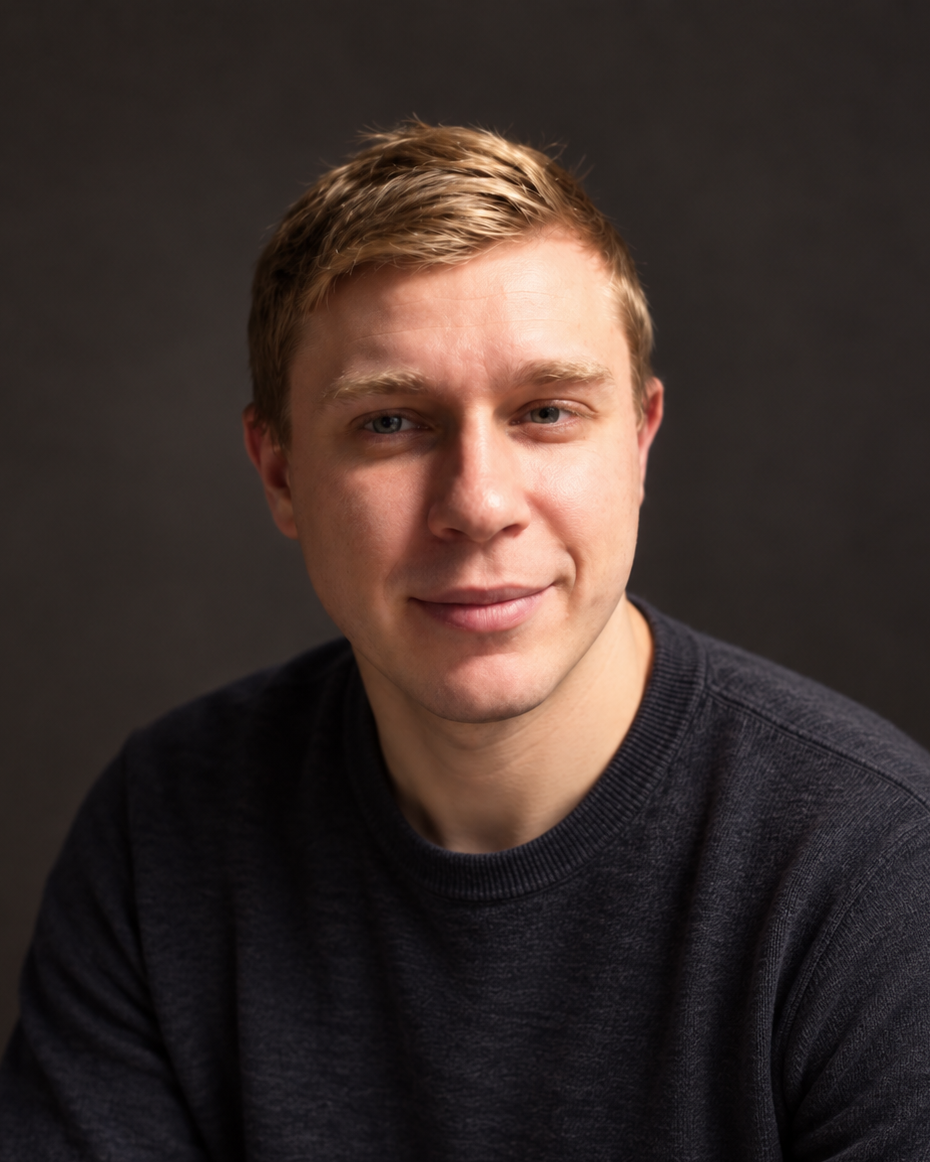
Rose helped develop, and now lives on a farm, manages a wedding venue named Mead Lake Lodge, and teaches piano using visuals from the DLG Pattern Method. A finalist for the UNO Press Lab Prize and Pushcart Nominee, Rose’s creative works appear at The Write Launch, Iowa Review, Burningword, Broken Pencil, and elsewhere, with published works on Amazon.
-
![]()
Thomas Winn
Thomas will teach you Heidegger’s Hegel
Thomas Winn is a PhD student who is working on the intersection between nihilism in postmodernity and the question of determinate Being. In this work he focuses on the thought of Martin Heidegger, Friedrich Nietzsche, and a range of contemporary philosophers that share a similar direction in their response to the problem of the question of Being. From this exploration he has come to speculate on the fundamental problems of relativity/contingency and the possibility of absoluteness, which has opened a connection between the already-present passage from Nietzsche to Heidegger, and Hegel, as the philosopher of absolute knowing.
-
![]()
Layman Pascal
Layman will teach metaphysics of adjacency
Layman Pascal is a feral philosopher, postmetaphysical nondualist & metamodern apocalyptarian bon vivant. He is co-chair of the Foundation for Integral Religion and Spirituality, host of The Integral Stage podcast series and author of numerous idiosyncratic works on depth philosophy, revised spirituality and politics. Track him down on his Q&A Substack or check out his courses at the Parallax Academy.

From the course to a living philosophical conversation
The Science of Logic course became the starting point for a wider collective philosophical process.
Students, teachers, and invited thinkers came together to test Hegel’s logic against contemporary questions — from contradiction, life, and subjectivity to AI, mysticism, education, and collective forms of thought.
To watch the conference, click here.


Logic for the Global Brain: Singular Universality as Perfect Opposition
This collective process became Logic for the Global Brain — an anthology exploring what Hegel’s logic can still make possible for philosophy, community and contemporary thought.
To learn more about the anthology, click here.
AI CAN SUMMARIZE HEGEL. WE READ HIM.
Go beyond the summary
AI can summarize a book, explain a concept or answer a question in seconds. What remains rare is a space in which people can think collectively and over time. Philosophy Portal is built to be that space.
Our courses are designed around close reading and sustained engagement with the text itself. Rather than offering another introduction to Hegel, Nietzsche, Lacan or Marx, we work through major philosophical texts in depth — following their arguments, concepts and contradictions as they unfold.
Join a community, not just a classroom
Taking a Philosophy Portal course is also a first entry point into a wider intellectual community. We connect courses, reading groups, events, conferences and an international philosophical community into a growing ecosystem of thought. You can take a look at what The Portal - our live philosophycal community - does here.